Interactive Journey
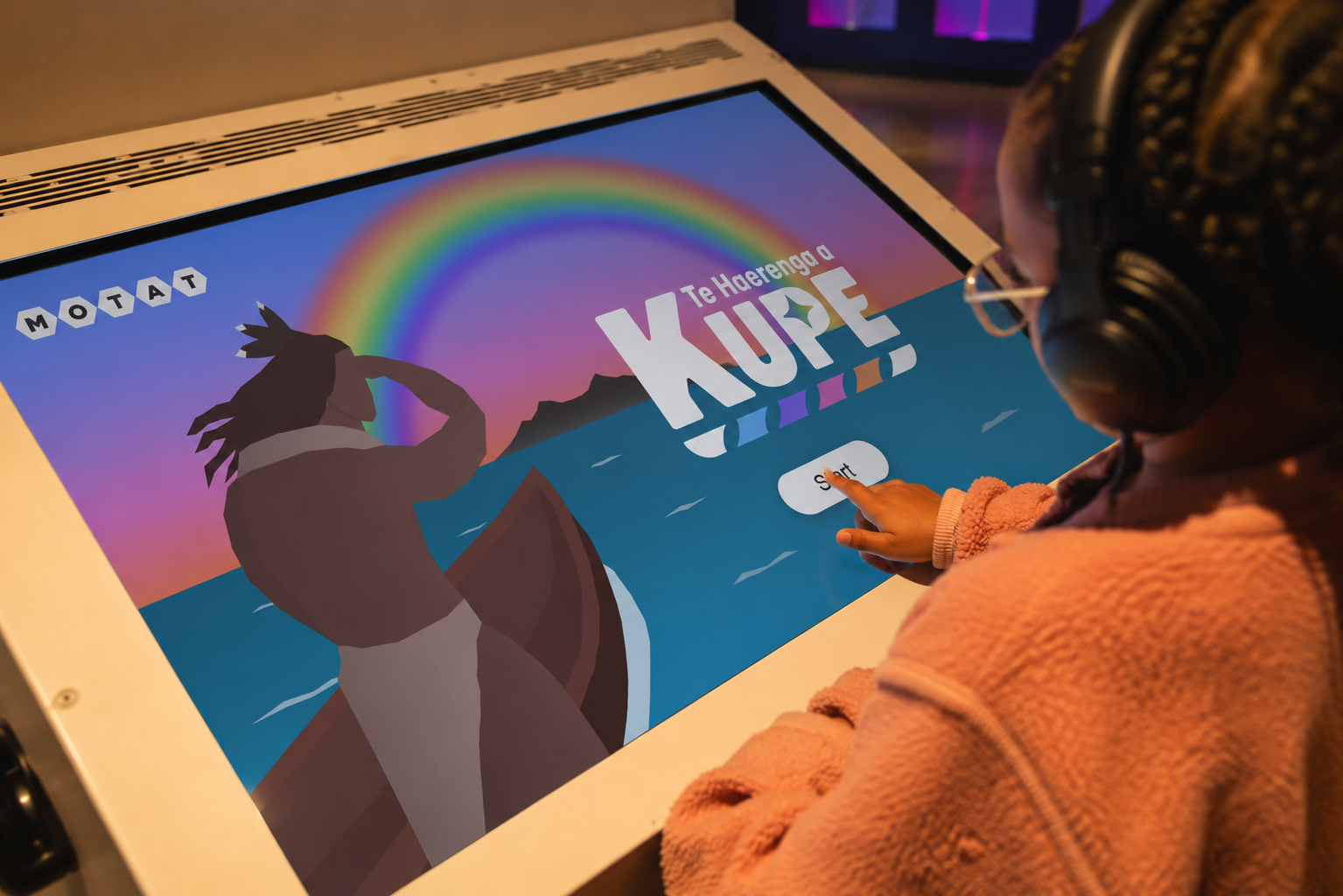
Children move through the story of Kupe through a playable sequence instead of passively reading static information.
Te Haerenga a Kupe is an interactive educational game created for MOTAT, the Museum of Transport and Technology. The project was designed to teach children about Kupe’s journey in a playful, engaging, and accessible way.
Brief
Client
My Role
THE BRIEF
MOTAT wanted an engaging digital experience that could help children learn about the journey of Kupe. The challenge was to turn educational content into something playful enough to hold attention while still respecting the story and its cultural significance.
Our group approached the project as an interactive learning experience, using game mechanics, visual storytelling, and motion to help children move through the journey rather than simply reading about it.
TEAM STRUCTURE
Developed visual assets and helped shape the illustrative identity of the experience.
Created movement and animation moments that helped make the journey feel alive and engaging.
Designed interface elements, interaction layouts, and the visual structure of the game screens.
I coded the game, implemented interactions, connected the designed assets into a playable experience, and helped translate the concept into a functioning digital product.
KEY FEATURES
Children move through the story of Kupe through a playable sequence instead of passively reading static information.
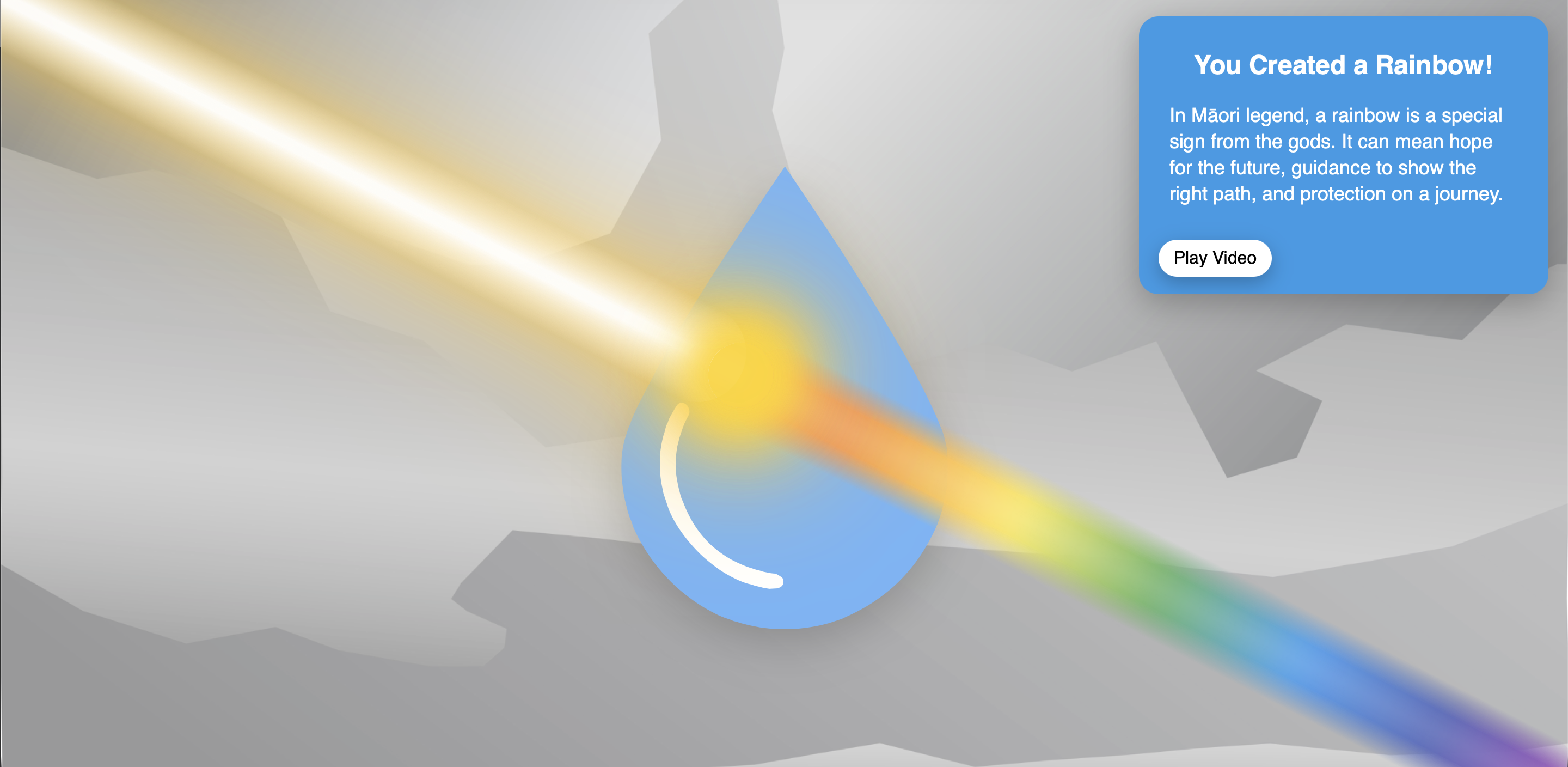
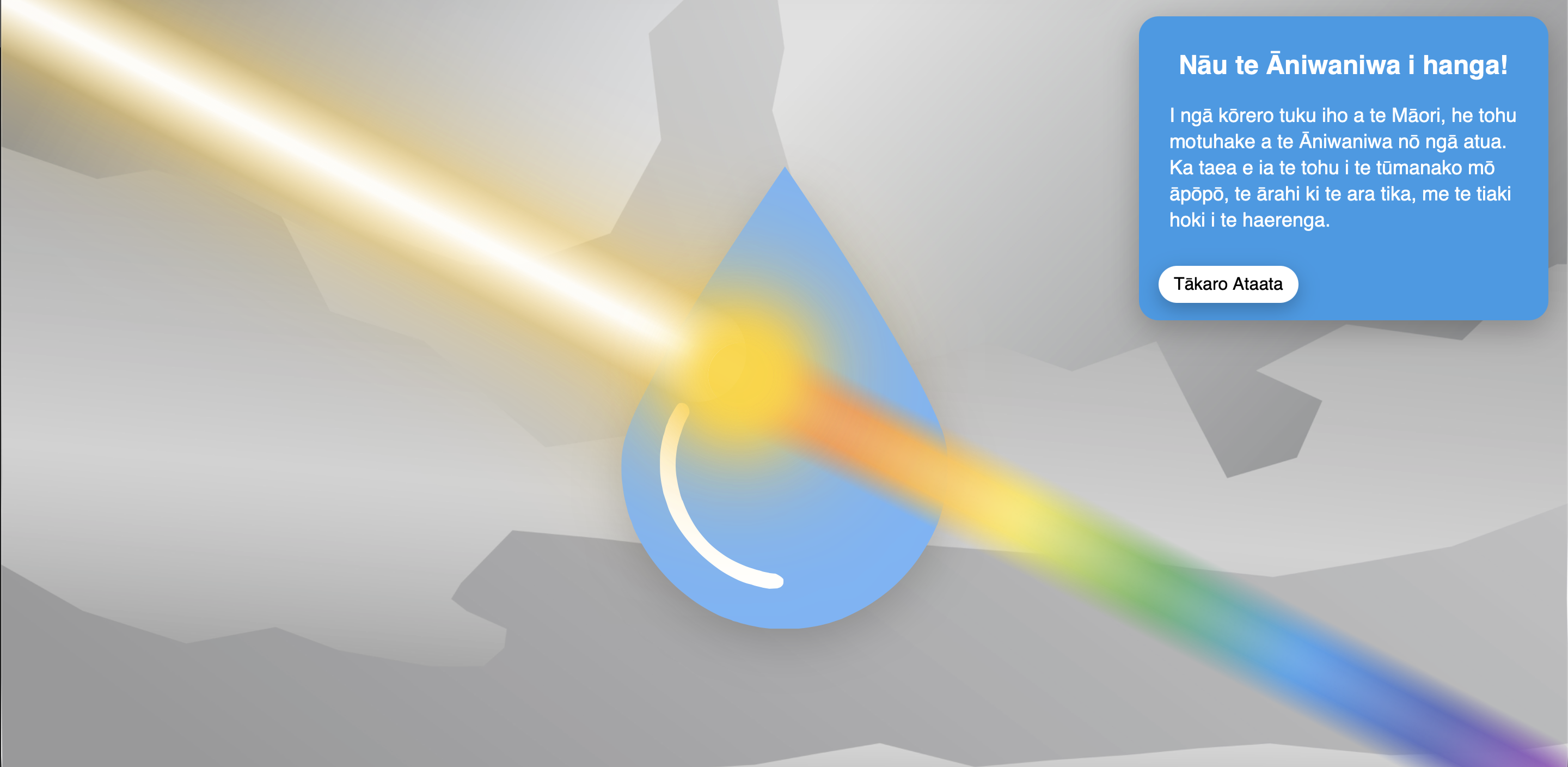
Learning content is embedded into the game experience so information appears in context rather than feeling separate from play.
Animation and interaction feedback help guide players, reward progress, and keep the experience engaging for younger users.
DEVELOPMENT DECISIONS
My main responsibility was coding the game and making sure the interactive experience worked smoothly. This meant translating visual and motion ideas into functional interactions while keeping the game simple enough for kids to understand.
Because the project was created for a museum context, the experience needed to feel immediately understandable. I focused on clear interaction feedback, simple controls, and a flow that helped young users understand what to do next without needing heavy instructions.
FULL PROCESS DOCUMENTATION
The complete report covers the client brief, team process, design direction, interaction decisions, development approach, testing, and how the final game was shaped for young learners in a museum context.
Read Full ReportREFLECTION
This project helped me understand how front-end development can support storytelling and education. Coding the game taught me how to work with a multidisciplinary team, translate designed assets into interactive systems, and build with a specific audience in mind.
It also showed me the importance of clarity in educational interaction design. For children, every interaction needs to feel understandable, rewarding, and easy to follow.